Face & Cosmetic
Dermal Fillers in Kochi
Hyaluronic acid and other fillers for cheeks, tear trough, jawline, temples and nasolabial folds — plastic surgeon-performed in the OPD at Lakeshore Hospital, Ernakulam.
Book a Consultation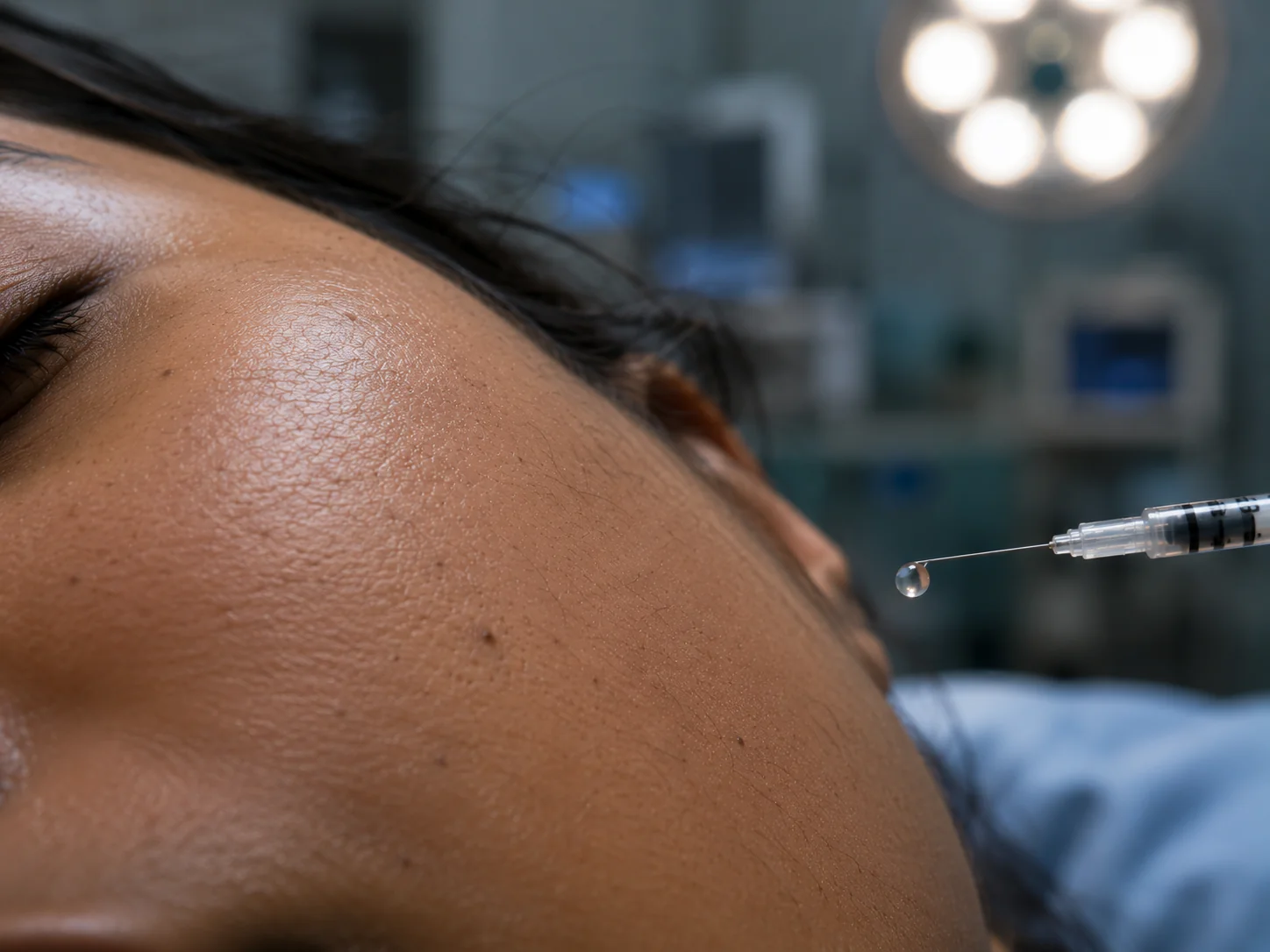
Hyaluronic acid and other fillers for cheeks, tear trough, jawline, temples and nasolabial folds — plastic surgeon-performed in the OPD at Lakeshore Hospital, Ernakulam.
Book a Consultation
About this treatment
A dermal filler is a gel injected beneath the skin to add volume, restore structure or soften contours. Most fillers are made from hyaluronic acid (HA) — a substance that occurs naturally in the skin. Results are immediate, reversible with hyaluronidase, and last 6 to 18 months depending on product and area.
Fillers and Botox treat different problems. Botox relaxes muscles to soften dynamic wrinkles. Dermal fillers add volume — for flat cheeks, under-eye hollowing, a receding chin, nasolabial folds, hollow temples. They are not interchangeable. The right treatment depends on what the problem actually is. Usually we advise a combination of both.
Is this right for you?
Active infection or inflammation at the planned site, allergy to product components, pregnancy or breastfeeding, certain autoimmune conditions. Significant skin laxity is a contraindication — adding volume over loose skin can worsen the appearance. Disclose any previous filler, cold sore history if treating near the mouth, and all blood thinners at consultation.
Where fillers are used
Volume loss in the mid-face flattens the cheeks and ages the face. Cheek filler in Kochi restores mid-face projection and structure — the aim is natural fullness, not prominent cheekbones.
The groove from the inner eye corner deepens into a hollow shadow with age. Tear trough filler is technically demanding — the skin is thin, placement must be precise, and the Tyndall effect (bluish discolouration from superficial placement) is a real complication risk in this area.
Filler can soften deep nose-to-mouth lines. Worth noting: nasolabial folds often deepen because of cheek volume loss above — treating the mid-face is sometimes more effective than injecting directly into the fold.
Jawline filler creates a cleaner lower facial contour. Chin filler adds projection in patients with a mild structural deficit — not a substitute for surgery, but meaningful for mild cases with no downtime.
Temple hollowing gives a skeletonised look as the temporal fat pad reduces with age. Restoring volume here improves overall facial balance without targeting a specific wrinkle.
Products used
Patients often arrive asking for a specific brand. Understanding the product category matters more than the name.
The standard first choice for most filler treatments. HA occurs naturally in the body and can be dissolved with hyaluronidase if the result is wrong or a complication occurs. Different products within each brand are formulated for different depths and purposes.
Radiesse (Merz) — immediate volume plus collagen biostimulation. Lasts 12–18 months. Cannot be dissolved. If the result is not ideal, you wait.
Sculptra (Galderma) — not a traditional filler. PLLA stimulates your own collagen over a series of sessions; results appear over 2–3 months and last up to 2 years. Used for global volume loss, not precise localised filling. Requires patience — patients expecting an immediate result will be disappointed.
There are many brands and sub-brands, each with subtle differences in G prime, elasticity, viscosity and longevity. These properties determine where a product is best placed and what problem it is designed to solve. In practice, the specific product used depends on availability, the surgeon's confidence with a particular product, cost and individual patient factors.
Honest expectations
Fillers work well when volume loss is the actual problem. They do not tighten loose skin — adding volume over laxity can worsen the appearance. They do not treat dynamic wrinkles from muscle movement (that is Botox), and they do not improve skin texture or pigmentation.
The most common cause of unnatural results is too much product. Over-filled cheeks, pillow face, distorted proportions — these happen from over-treatment, not from the product. A conservative approach with a 2-week review is better than an aggressive approach that needs to be dissolved. Fillers cannot produce a large structural change. When significant volume is required, that usually points toward a surgical procedure — filler is not the solution in those cases.
Common: bruising, swelling, tenderness — settling within days. Less common: lumps, asymmetry, the Tyndall effect. Most serious: vascular occlusion. If filler enters or compresses a blood vessel it can cause skin necrosis or, around the nose and eyes, vision loss. This is rare but a genuine risk — which is why these procedures must be performed by someone with the anatomical knowledge and clinical judgment to recognise and treat it immediately.
The procedure
Topical anaesthetic is applied 20–30 minutes before. Filler is placed with a fine needle or blunt cannula — 30 to 60 minutes depending on areas treated. Some results are visible immediately. Final assessment at 2 weeks once swelling has settled.
After treatment
Swelling and mild bruising for 3–7 days — more in the tear trough and around the mouth. Avoid massage, pressure and strenuous exercise for 24–48 hours. Contact the clinic promptly if you notice unusual blanching, mottling or pain out of proportion to the procedure.
What Dr Roy expects from patients
Pricing
At our centre, Lakeshore Hospital, Ernakulam, dermal filler treatment ranges from Rs 10,000 to Rs 30,000 per area depending on the product used and volume required. A meaningful quote requires examination.
Cheap fillers without proper assessment or product transparency are a risk, not a saving. Correcting poor filler work — hyaluronidase, repeat sessions, sometimes surgical correction — almost always costs more than the original procedure.
A note from Dr Roy
Fillers are a well-established tool for correcting small deficiencies and volume loss. The best results are subtle — patients look better, but nobody can quite say why. That is what we aim for.
The risks and complications described on this page are real but uncommon. They are disclosed so you are informed, not to alarm you. For anyone thinking seriously about facial aesthetics, fillers are worth understanding and considering.
One important point on volume: an adequate amount is necessary for a good result. Under-filling addresses the problem only partially and produces an outcome that satisfies neither patient nor surgeon. When a specific volume is recommended at consultation, it is based on what the problem actually requires — not more, not less.
Common questions
Most HA fillers last 6 to 18 months. High-movement areas break down filler faster. Radiesse lasts 12–18 months. Sculptra can last 2 years or more.
Hyaluronic acid fillers can be dissolved with hyaluronidase. Non-HA fillers like Radiesse and Sculptra cannot — you wait for them to wear off. This is why HA is the right starting point for most patients.
The most serious filler complication. Filler in or compressing a blood vessel blocks blood supply to surrounding tissue. Untreated, this causes skin necrosis. Around the nose and eyes it can affect vision. Rare — but requires immediate recognition and treatment by someone trained to manage it.
A bluish discolouration under the skin from superficially placed filler. Most common in the tear trough. Usually corrected with hyaluronidase.
Fillers add volume immediately. Biostimulators like Sculptra and Radiesse stimulate the body's own collagen — results appear gradually over months, last longer, and cannot be reversed.
Generally yes. The two treatments do not interfere. Many patients have both done in the same session when treating different areas and different problems.
At Lakeshore Hospital, Ernakulam, treatment ranges from Rs 10,000 to Rs 30,000 per area depending on product and volume. A meaningful quote requires examination.
Yes. An adequate volume is necessary for a good result. Under-filling addresses the problem only partially and produces an outcome that satisfies neither patient nor surgeon. When a specific volume is recommended at consultation, it is based on what the problem actually requires — not more, not less.
Both are HA filler ranges — Juvederm by Allergan, Restylane by Galderma. Both have products for different areas and depths, and both are reversible with hyaluronidase. The choice depends on the specific product properties suited to the treatment area.
Related procedures
Connect with Dr Sinnet Roy — online or in person at Lakeshore Hospital, Ernakulam.