Face & Cosmetic
Botox Treatment in Kochi
Botulinum toxin for wrinkle softening at Lakeshore Hospital — proper facial assessment, authentic products and doctor-led treatment.
Book a Consultation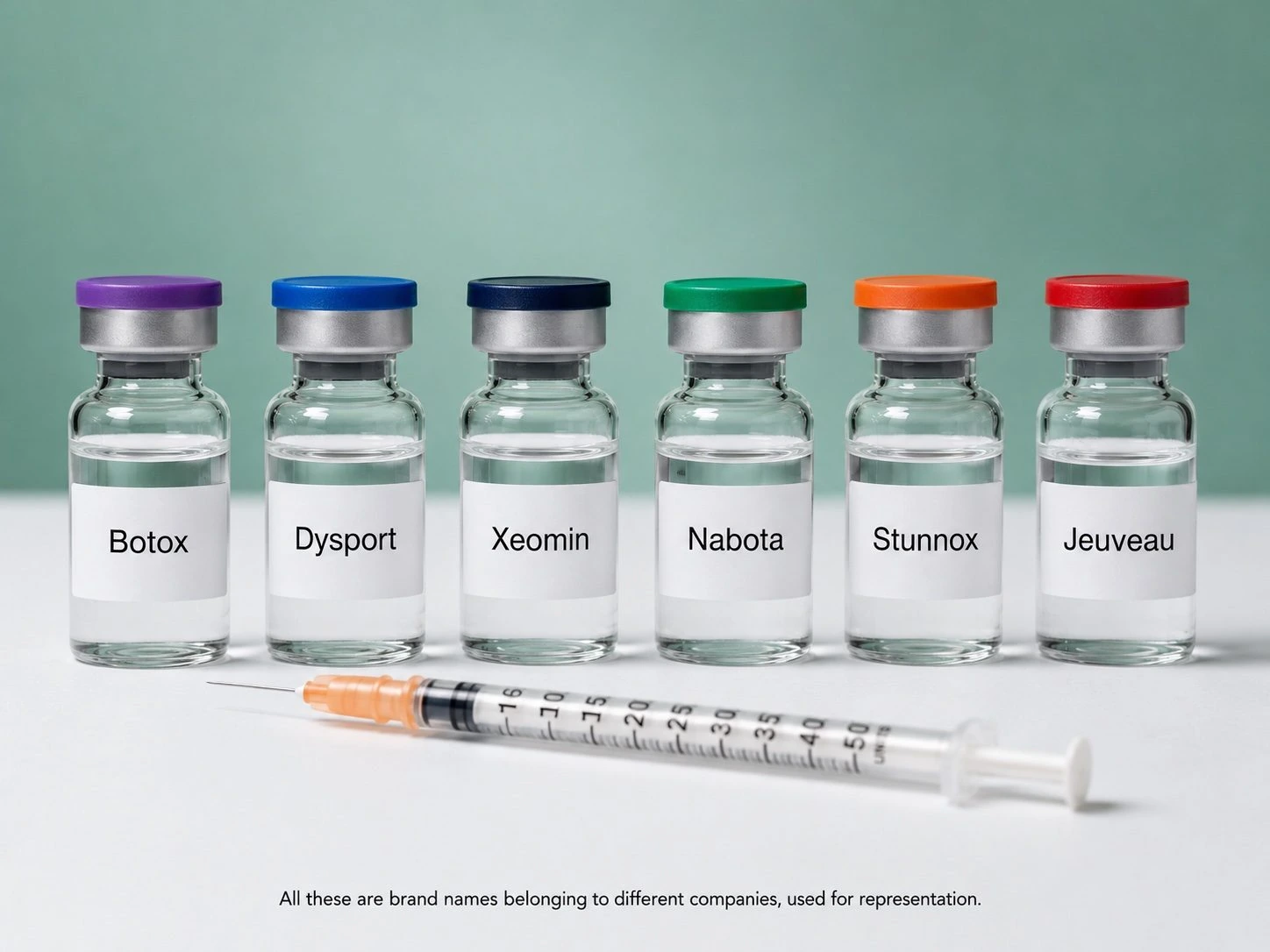
Botulinum toxin for wrinkle softening at Lakeshore Hospital — proper facial assessment, authentic products and doctor-led treatment.
Book a Consultation
About this treatment
Botox is a brand name. Botulinum toxin is the medical name. Many patients use the word Botox to describe neuromodulator injections in general — that is the word used here, because it is what most patients search for.
In aesthetic practice, botulinum toxin temporarily relaxes selected facial muscles. When a muscle contracts less strongly, the overlying skin creases less. This helps soften dynamic wrinkles — lines caused by repeated facial movement — while preserving natural facial expression.
It is mainly useful for frown lines between the eyebrows, forehead lines and crow's feet around the eyes. Deep static lines, volume loss, skin laxity and age-related sagging may need other treatments depending on the case.
Botulinum toxin is a medical treatment. It should only be performed by a qualified doctor using an authentic product from an authorised source. In Kochi, Dr Sinnet Roy performs botox treatment at Lakeshore Hospital, Ernakulam.
Is this right for you?
Botulinum toxin is generally avoided in patients with allergy or hypersensitivity to the product, or with active infection at the planned injection site. Extra caution is needed in patients with neuromuscular disorders such as myasthenia gravis or Lambert-Eaton syndrome, pre-existing eyelid droop, facial weakness, swallowing or breathing difficulty, or medicines that affect neuromuscular transmission. Pregnancy and breastfeeding are contraindications for cosmetic use.
If you take blood thinners or antiplatelet medicines, do not stop them without discussing this with your treating doctor. Bruising risk may be higher, but this is manageable.
Honest expectations
Botulinum toxin is effective for dynamic wrinkles — lines that appear or deepen with facial movement. Frown lines, forehead creases and crow's feet respond well. Results are temporary, lasting around 3 to 4 months for most patients.
It does not treat deep static lines, skin laxity, volume loss, pigmentation or age-related sagging. These problems may need fillers, lasers, skin boosters, tightening procedures or surgery depending on the case. Some patients come expecting Botox to resolve everything — it will not.
A frozen or artificial look happens because of excessive dosing, poor planning, inappropriate treatment areas or lack of facial analysis. Good treatment should make you look fresher, not different. The aim is to soften lines while preserving expression, balance and individuality.
Most side effects are mild and temporary: redness, small bumps at injection points, mild swelling, bruising, brief discomfort, headache or flu-like symptoms. Less common complications include eyelid droop, eyebrow asymmetry, uneven smile, heaviness around the forehead or eyes and temporary weakness in nearby muscles.
Unwanted spread beyond the injection area is uncommon but can happen. Rarely, this may cause eyelid droop, double vision, difficulty swallowing, difficulty speaking or breathing difficulty. Seek urgent medical attention if you develop breathing difficulty, swallowing difficulty or significant weakness after treatment.
Reduced response is uncommon but possible. One cause is antibody formation after repeated exposure. This is why treatment should be medically planned and not done too frequently or casually.
The procedure
Treatment takes around 15 to 20 minutes. Small injections are placed precisely into target facial muscles using a very fine needle. Most patients tolerate treatment well. There may be brief pin-prick discomfort. No anaesthetic is required for most areas. Early softening may be noticed within 1 to 3 days. The full result is assessed at 10 to 14 days.
After treatment
There is no downtime. Most patients return to normal activities the same day. Avoid rubbing or massaging the treated area, strenuous exercise for 24 hours, and remaining flat for several hours after treatment. Avoid facial treatments or massage immediately after the procedure. Follow any specific aftercare instructions given at your appointment.
What Dr Roy expects from patients
A good consultation is not just about injections. It is about understanding your anatomy, facial movement and what result will look natural for you. To make that assessment useful, patients are asked to:
If something about the plan is unclear, ask. If treatment is not right for you at this point, that will be said plainly.
Botox vs fillers
Botulinum toxin and fillers are often grouped together, but they treat different problems.
Botulinum toxin relaxes overactive muscles and softens dynamic wrinkles. Fillers restore volume and are used for hollowness, contour correction and selected static lines. Some patients need only botulinum toxin. Some need fillers. Some need skin treatment. Some do not need any procedure at all.
Treatment should always be based on what the problem actually is — not on what a patient has read about or seen on someone else.
Why it matters
Botulinum toxin injections are available from beauticians, skin clinics, dental clinics and chain aesthetics centres across Kochi. The molecule is the same. What differs is who is injecting it, how they are trained, and what happens when something goes wrong.
A plastic surgeon has trained in facial anatomy — nerves, muscles, blood supply — as part of a regulated superspeciality programme. That knowledge informs accurate placement, early recognition of problems, and management of complications if they occur. Eyelid droop or facial asymmetry after poorly placed injections is a medical problem, not just an aesthetic inconvenience.
There is also the question of what you actually need. Many patients who ask for Botox do not need Botox. Some need fillers. Some need skin treatment. Some do not need any procedure at all. A surgeon with broader clinical training is more likely to tell you that plainly — including when treatment is not indicated.
Credentials, clinical environment and product source all matter. You should know who is treating you and what their training actually covers before agreeing to any injection.
Pricing
Cost depends on the area treated, number of units required, muscle strength, product used and whether one area or multiple areas are being treated. A meaningful quote requires examination — stronger muscles need more units than weaker ones, and treatment plans vary considerably between patients.
As a practical guide:
A low price without proper consultation, product clarity or medical supervision should be treated with caution. Cheap Botox is not a saving — it is a risk.
Common questions
Botox is a brand name. Botulinum toxin is the medical name of the treatment category. Many patients use the word Botox to describe neuromodulator injections in general. At consultation, the exact product, dose, indication and suitability are discussed clearly.
For most aesthetic patients, results last around 3 to 4 months. Duration varies depending on the area treated, strength of the muscle, dose, product, metabolism, previous treatment history and how expressive the patient is.
Some patients notice early softening within 1 to 3 days. Clearer improvement is usually seen over the first week. The full effect is assessed around 10 to 14 days after treatment.
Yes. The aim is not to freeze the face. The aim is to soften lines while preserving expression, balance and individuality. A frozen or artificial look usually happens because of excessive dosing, poor planning or ignoring the patient's natural expression pattern. Good treatment should make you look fresher, not different.
No. Botulinum toxin cannot be immediately reversed or dissolved. The effect is temporary and gradually wears off over time.
If you stop treatment, the treated muscles gradually regain activity. Your usual facial movement returns over time. Stopping Botox does not suddenly damage your face.
Botulinum toxin is generally avoided in patients with allergy to the product, active infection at the planned injection site, or neuromuscular disorders such as myasthenia gravis. It is also avoided during pregnancy and breastfeeding for cosmetic indications. Extra caution is needed in patients with pre-existing eyelid droop, facial weakness, swallowing or breathing difficulty.
No. Men commonly seek treatment for forehead lines, frown lines, crow's feet and a tired or tense appearance. Men often need a different treatment plan because facial structure and muscle strength may differ.
There is no fixed age. The right time depends on facial movement, anatomy, skin quality and personal preference — not on age alone. Some patients never need it.
A single routine facial area costs Rs 5,000–10,000. Larger or stronger-muscle areas range from Rs 10,000–20,000. A full-face plan is Rs 18,000–35,000 and above. A meaningful quote requires examination, as stronger muscles need more units and plans vary between patients.
Connect with Dr Sinnet Roy — online or in person at Lakeshore Hospital, Ernakulam.